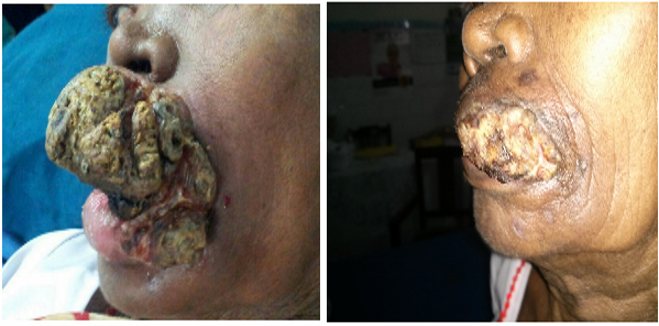
Dr. Vinod Gore performed the first ElectroChemoTherapy (ECT)
procedure in India at the Sahyadri Hospital, Karve Road, Pune. He
has been using this technique since the past one year plus, with a
very good rate of success.
ECT is Enhanced Chemotherapy. Electrochemotherapy (ECT) is a
combination of electroporation amd chemotherapy. Electroporation
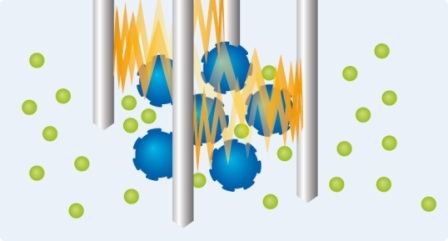
uses electric impulses to create nano pores in cell membrane of
cancer cells (tumour cells). Induction lines emerging from
electric impulses get focused on cancer cells due to the
dielectric properties of these cells. Electroporation thus, does
not affect healthy cells.
Pores increase cell-membrane permiability. This allows easy
diffusion of Chemotherapeutic drug into the cancer cells.
It is a method for opening the wall of the cancer cell and
allowing the chemo agent to enter the cell. This is achieved by
subjecting the tissue to a series of high voltage electrical
pulses.
1.Day Procedure. Takes 20 – 30 Minutes.
2. No major adverse side effects.
Electrochemotherapy is a therapeutic procedure for treating
cutaneous tumours via electroporation using certified electrodes.
The electroporation process is combined with local chemotherapy.
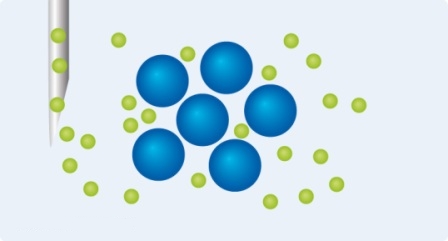
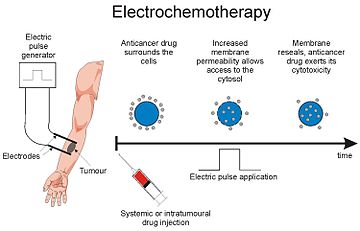
After locating the exact position of the tumor, The chemo agent is injected locally around the tumor or intravenous in a low concentration.
Position the electrodes around the tumor and the generate 8 pulses of 1000 Volts with a duration of one millisecond. This will open the cell membrane of the tumor cells and make them permeable.
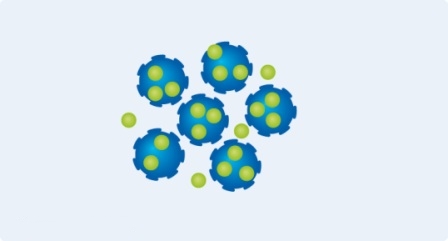
After the electrical impulses have stopped, the membrane of the cells will close. The chemo agent is now trapped inside the tumor cells and can break down the DNA of the cell.
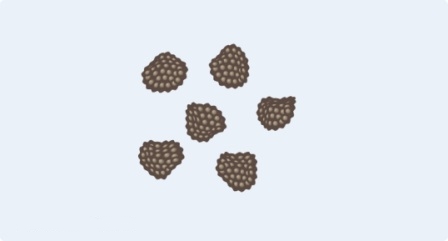
The DNA of the tumor cell is breaking down and the cell go into necrosis.
ECT is given locally at tumour site. Tumours which are within 15mm to 20mm depth from the skins surface can be treated with Electrochemotherapy.
Electrochemotherapy is a new and efficient method to deliver chemotherapy to cancer tumours. In this therapy, small electric impulses are given at the site of the tumour; hence the name ‘Electro-Chemotherapy’.
Electrochemotherapy (ECT) treats cutaneous and subcutaneous tumours, i.e. tumours which are close to the skin. The therapy works for tumours which are up to 15 to 20 mm deep from the outer layer of the skin.
Chemotherapy medicine is injected either through I.V. or locally
at the tumour site. After that, quick electric impulses are given
at the tumour site with the help of the device. The electric
impulses create very small pores in the cell membrane of the
tumour cells. These pores are temporary in nature. Pores help the
medicine to penetrate into the tumour cells. When electric
impulses stop, the pores close and the medicine gets trapped
inside the cell.
Once inside a cancer cell, the medicine destroys DNA of the cell.
As a result, the tumour gets controlled i.e. it either disappears
totally or reduces in size. This treatment also helps to
stop/reduce oozing and bleeding from the tumour. It helps to
reduce pain, thus giving great relief to the patient. It improves
the appearance of the tumour. This results in better quality of
life for the patient. Social interaction also becomes easier.
Additionally, the pores open the gates for matter inside the
cancer cell to come out. This activates body’s immune system to
act against cancer.
ECT can be done in a ‘Minor Operation Theatre’ or a ‘Treatment
Room’. It is normally done under local anaesthesia. Only in case
of large tumours general anaesthesia may be required. The patient
may be sedated if thought necessary.
Local anaesthesia ensures that the patient does not feel any pain
during the procedure. Post the procedure, there may be minor pain
which is easily controlled with routine painkillers.
One session of ECT requires 20 to 30 minutes. It takes 2 to 4
weeks for the results to be seen. Things can keep improving even
after that. In case of tumours which are visible from the outside,
drying and healing process of the tumour can be seen. One can
notice the reduction in size or total disappearance of the
tumour.
Patients are required to come for a few follow-up visits. This
procedure can be repeated if the doctor finds it necessary to do
so.
Are there any side-effects ? Very small dosage of chemotherapy medicine is used in ECT compared to systemic chemotherapy (usual chemotherapy). Due to this, drug side-effects are negligible. The treatment method too has no major side-effects.
Electrochemotherapy has been systematically examined in Europe. In a study conducted, a total of 1009 nodules in 247 patients were treated via ECT method. In accordance with objective criteria, the therapy was successful in an average of 80% of the treated cases responding to treatment. The response rate was 73.7%.
Chemotherapy (often abbreviated to chemo and sometimes CTX or CTx)
is a category of cancer treatment that uses chemical substances,
especially one or more anti-cancer drugs (chemotherapeutic agents)
that are given as part of a standardized chemotherapy regimen.
Chemotherapy may be given with a curative intent, or it may aim to
prolong life or to reduce symptoms (palliative chemotherapy).
Along with hormonal therapy and targeted therapy, it is one of the
major categories of medical oncology (pharmacotherapy for cancer).
These modalities are often used in conjunction with other cancer
treatments, such as radiation therapy, surgery, and/or
hyperthermia therapy. Some chemotherapy drugs are also used to
treat other conditions, including AL amyloidosis, ankylosing
spondylitis, multiple sclerosis, Crohn’s disease, psoriasis,
psoriatic arthritis, systemic lupus erythematosus, rheumatoid
arthritis, and scleroderma.
Traditional chemotherapeutic agents are cytotoxic, that is to say
they act by killing cells that divide rapidly, one of the main
properties of most cancer cells. This means that chemotherapy also
harms cells that divide rapidly under normal circumstances: cells
in the bone marrow, digestive tract, and hair follicles.