Cancer screening aims to detect cancer before symptoms appear. This
may involve blood tests, urine tests, other tests, or medical
imaging. The benefits of screening in terms of cancer prevention,
early detection and subsequent treatment must be weighed against any
harms.
Screening tests must be effective, safe, well-tolerated with
acceptably low rates of false positive and false negative
results.
Screening for cancer can lead to cancer prevention and earlier
diagnosis. Early diagnosis may lead to higher rates of successful
treatment and extended life. However, it may also falsely appear to
increase the time to death through lead time bias or length time
bias.
Breast cancer screening is the medical screening of asymptomatic,
apparently healthy women for breast cancer in an attempt to achieve
an earlier diagnosis.The assumption is that early detection will
improve outcomes. A number of screening tests have been employed,
including clinical and self breast exams, mammography, genetic
screening, ultrasound, and magnetic resonance imaging.
There are mainly Three types of tests used for Breast Cancer
Screening as :
Breast self-examination (BSE) is a screening method used in an
attempt to detect early breast cancer. The method involves the
woman herself looking at and feeling each breast for possible
lumps, distortions or swelling.
Opportunity for woman to become familiar with her breasts
Monthly exam of the breasts and underarm area
May discover any changes early
Begin at age 20, continue monthly
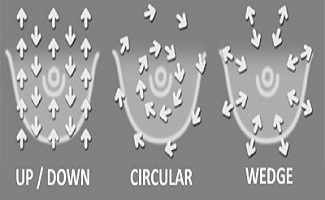
It is easy to do and the more you do it, the better you will get at it.When you get to know how your breasts normally feel, you will quickly be able to feel any change, and early detection is the key to successful treatment.Most breast lumps are found by women themselves, but in fact, most lumps in the breast are not cancer.The best time to do breast self-exam is right after your period, when breasts are not tender or swollen. If you do not have regular periods or sometimes skip a month, do it on the same day every month.When to do a self Breast Exam : The best time to do breast self-exam is right after your period, when breasts are not tender or swollen. If you do not have regular periods or sometimes skip a month, do it on the same day every month.
1. Looking
2. Feeling
A Clinical Breast Examination (CBE) is a physical examination of
the breast done by a health professional. Clinical breast
examinations are used along with mammograms to check women for
breast cancer.
A Clinical Breast Examination may be part of your regular checkup.
Talk with your health professional about how often you need a
breast examination. Women with breast implants should also have
regular clinical breast examinations.
Variables important in palpating the breast correctly are :
Patient’s Positions required during examination are :
Clinical breast examination requires flattening breast tissue
against the patient’s chest
Patient is supine during the examination
Mammography is the process of using low-energy X-rays (usually around 30 kVp) to examine the human breast, which is used as a diagnostic and screening tool. The goal of mammography is the early detection of breast cancer, typically through detection of characteristic masses and/or microcalcifications.
Cervical screening is a way of preventing cancer by finding and
treating early changes in the neck of the womb (cervix). These
changes could lead to cancer if left untreated. The screening uses
a test called cytology, which many people know as the smear
test.
A nurse or doctor takes a sample of cells from the cervix with a
small brush. They send the sample to a laboratory to be checked
for abnormalities. In some cases, samples are also tested for a
virus called human papilloma virus (HPV) that increases the risk
of cervical cancer.
There are two types of tests used for cervical cancer screening as :
The Pap test can find early cell changes and treat them before
they become cancer. The Pap test can also find cervical cancer
early, when it’s easier to treat. The pap test, known earlier as
Pap smear, cervical smear, or smear test is a method of cervical
screening used to detect potentially pre-cancerous and cancerous
processes in the endocervical canal (transformation zone) of the
female reproductive system.
A Pap smear is performed by opening the vaginal canal with a
speculum, then collecting cells from the outer opening of the
cervix of the uterus and the endocervix. The cells are examined
under a microscope to look for abnormalities. The test aims to
detect potentially pre-cancerous changes (called cervical
intraepithelial neoplasia (CIN) or cervical dysplasia), which are
caused by sexually transmitted human papillomaviruses. The test
remains an effective, widely used method for early detection of
pre-cancer and cervical cancer. The test may also detect
infections and abnormalities in the endocervix and endometrium.
The HPV (Human Papilloma Virus) test finds certain infections that
can lead to cell changes and cancer. HPV infections are very
common, and most go away by themselves and don’t cause these
problems. The HPV test may be used along with a Pap test,
or to help doctors decide how to treat women who have an abnormal
Pap test. The human papillomavirus (HPV) test detects the presence
of human papillomavirus, a virus that can lead to the development
of genital warts, abnormal cervical cells or cervical cancer.
The HPV test is available only to women; no HPV test yet exists to detect the virus in men. However, men can be infected with HPV and pass the virus along to their sex partners.

Colorectal cancer (also known as colon cancer, rectal cancer or bowel cancer) is the development of cancer in the colon or rectum. It is due to the abnormal growth of cells that have the ability to invade or spread to other parts of the body.
smoking, and not enough physical activity. Dietary factors that
increase the risk include red and processed meat, as well as
alcohol. Another risk factor is inflammatory bowel disease, which
includes Crohn’s disease and ulcerative colitis.
Colon cancer screening can detect polyps and early cancers in the
intestines. This type of screening can find problems that can be
treated before cancer develops or spreads. Regular screenings may
reduce the risk of death and pain caused by colorectal cancer.
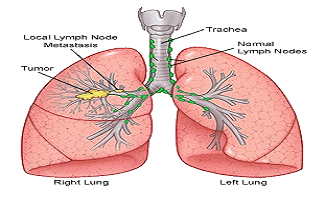
Lung cancer, also known as carcinoma of the lung or pulmonary
carcinoma, is a malignant lung tumor characterized by uncontrolled
cell growth in tissues of the lung.
If Lung Cancer left
untreated, this growth can spread beyond the lung by process of
metastasis into nearby tissue or other parts of the body. Most
cancers that start in the lung, known as primary lung cancers, are
carcinomas that derive from epithelial cells. The main primary
types are small-cell lung carcinoma (SCLC) and non-small-cell lung
carcinoma (NSCLC).